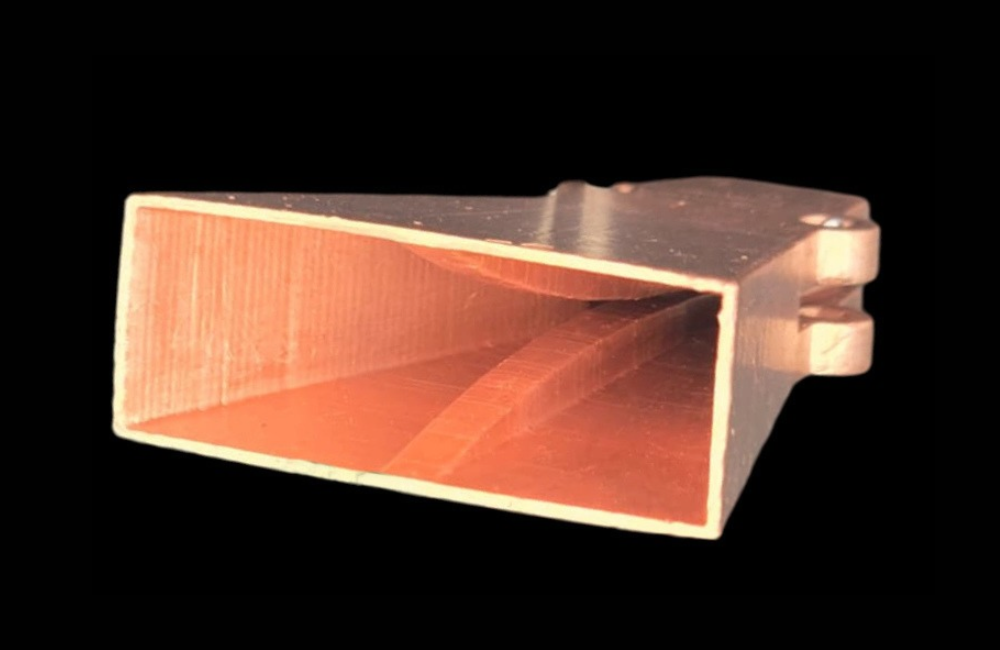
Horizon Microtechnologies is set to undertake a two-year project supported by a approximately €500,000 in grant funding focused on the industrialisation of metallised polymer micro 3D-printed components for satellite applications.
The project will focus on scaling Horizon’s 3D printing and coating capabilities for the production of high-volume satellite hardware, with a target application involving up to 50,000 precision coated shielding housings for constellation-class deployments. The project builds on Horizon's previously demonstrated ability to deliver key performance requirements for space and RF applications, and now aims to expand into a repeatable manufacturing framework for real satellite production scenarios. Horizon’s says that target applications could enable major customer-side savings versus conventionally machined metal parts, while also reducing mass by around 40%.
“Horizon has spent years proving that metallised polymer micro-AM can deliver far more than lightweight prototypes,” says Andreas Frölich, CEO of Horizon Microtechnologies. “This project is about the next step, taking a validated technology platform and building a manufacturing pathway geared towards the prices, leadtimes and throughput required for supplying and supporting satellite constellations with advanced components.”
Horizon’s hybrid manufacturing approach combines precision polymer 3D printing with advanced functional coatings and metallisation. The result is a route to components that combines metallic surface properties with the low weight, design freedom, and integration advantages of polymer micro-AM.
Frölich adds, “The space economy needs more than innovation, it needs credible routes to industrial production. When a component appears tens of thousands of times across a satellite constellation, weight, cost, and manufacturing repeatability become decisive. That is where Horizon can make a meaningful difference.”
The project will also support the expansion of Horizon’s in-house manufacturing infrastructure, coating scale-up, process verification, and collaboration with a specialist research partner.